Practical overview of inexpensive building materials and places to buy
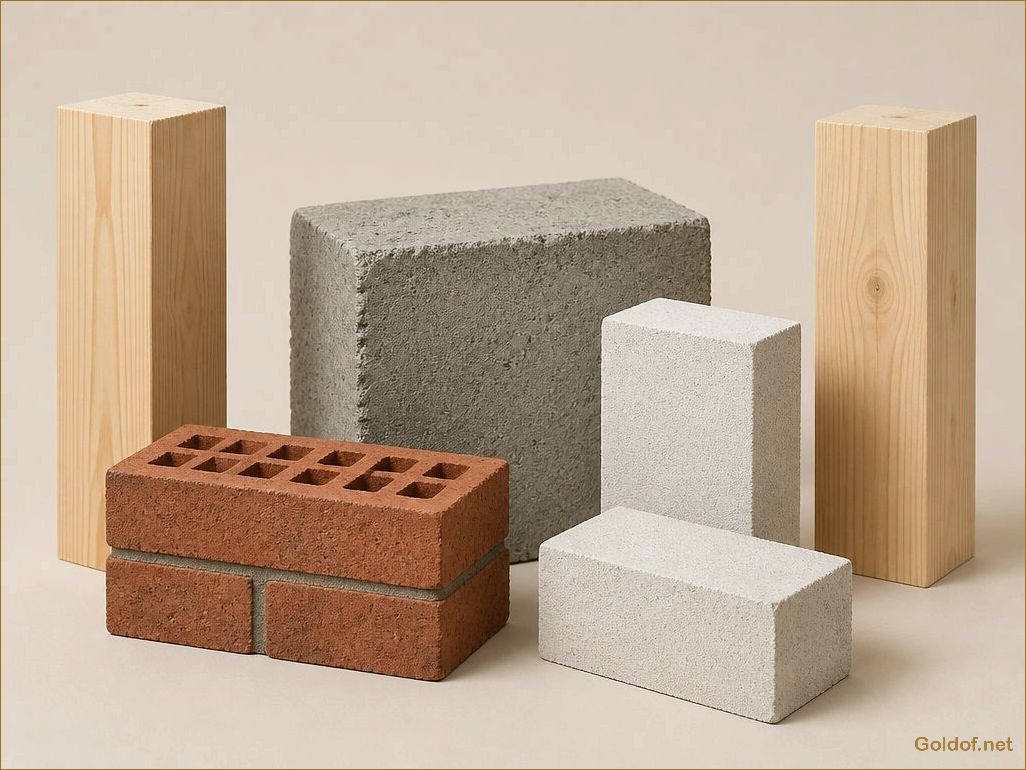
Cheap building materials are not a compromise, but a reasonable approach to repair and construction. With the right selection of budget analogues, you can significantly reduce the estimate without loss of quality and durability. Gypsum board, economy-class ceramic tile, class 32 laminate, aerated concrete or imitation beam – all of this is affordable and time-tested. The main thing is to pay attention to characteristics, certificates and reviews, rather than chasing the brand. Competent savings on materials allow you to invest the saved funds in quality installation or decoration. Build with wisdom – and the result will pleasantly surprise you and your wallet!
Choose aerated concrete for walls and foam polystyrene (EPS) for insulation – this combination reduces material and installation costs by approximately 20-35% compared to facing brick and mineral wool with comparable thermal insulation characteristics. Recommended parameters: aerated concrete D500, thickness 200-300 mm for exterior walls and 80-100 mm for interroom partitions; EPS density 15-30 kg/m³, thickness 50-100 mm. Thermal conductivity: Gas concrete ~0.10-0.14 W/m·K, EPS ~0.032-0.038 W/m·K. Approximate prices (reference): aerated concrete 3 000-5 000 ApprApproximate prices (reference): aerated concrete 3 000-5 000 ApproxApproximate prices (reference): aerated concrete 3 000-5 000 ApproxiApproximateprices (reference): aerated concrete 3 000-5 000 ApproxiApproximateApproximate prices (reference): aerated concrete 3 000-5 000
For floor covering, it is economical to use linoleum or laminated panels: linoleum 200-700 linlinlinlinoleum, folds quickly and is suitable for wet rooms with high-quality waterproofing; laminate 350-900 laminate / m2 when choosing the wear class AC3-AC4 (for the apartment is enough AC3 in the living rooms, AC4 is recommended for corridors). For black floor take OSB-3 thickness 12-18 mm (for floor better 18 mm), standard sheet 1250×2500 mm provides ~3,125 m2 of coverage; the price of the sheet is about 300-700 thethe the price, depending on the thickness and manufacturer.
When insulating facades and roofs, compare EPS and mineral wool: EPS is cheaper and lighter, thermal conductivity coefficient ~0.032–0.038 W/m·K; Mineral wool (stone) provides better vapor permeability and fire resistance, λ ≈0.036–0.040 W/m·K. The recommended thickness of the outer walls is 50-100 mm in mild climates and 100-150 mm in cold. For windows, choose a two-chamber glass package with a warm aluminum or PVC profile: indicative heat transfer U ≈1.1–1.5 W/m²·K; The price varies by area, typically 6,000-12,000 thethe the finished product, depending on the profile and fittings.
For interior finishing, prefer 12.5 mm plasterboard for walls and ceilings: a sheet of 1200×2500 mm weighs about 20 kg, the cost is about 250-450 ForFor For For For For walls and ceilings. Plastering and plastering work can be accelerated with ready-made dry mixtures: the cost of plaster finishing ~0.5–1.0 kg/m² per layer, a bag of 25 kg covers ~25–50 m² depending on the thickness. Buy adhesives and finishing materials in stock and compare the cost per square meter – the difference of 10-15% when choosing a brand often compensates for the loss of time and marriage in the independent selection of cheap low-quality analogues.
Practical tips for savings: plan the purchase in standard sizes (sheets 1200/1250/2440 mm) to reduce cuts and waste, calculate the stock of materials: tile and laminate – 5-10% per cut, wallpaper – 10-15% for drawing and joints, paint – 10-15% for two layers; buy large batches (discount 5-10%) and compare the cost per unit area. To reduce the cost of work, use a combined approach: buy inexpensive but easy-to-install materials and do some of the preparatory work yourself (removal of old coating, grounding, marking), and entrust complex operations to professionals by the hour or at a contractual price.

How to choose inexpensive plaster and plaster for walls: brands, cost and calculation for the room
Selection criteria: type of foundation (concrete, aerated concrete, brick), required leveling thickness, drying speed and price per bag taking into account the cost per m2. For indoor dry rooms, plaster is often more advantageous – the cost is lower and easier to grind; for wet areas – cement mixtures.
Brand / ProductTypeBag/bucket massCost (at 10 mm)ApplicationApproximate price (rub.)Knauf RotbandGypsum plaster30 kg9–11 kg/m²Wall alignment 5-30 mm inside250–450Volma GypsumGypsum plaster30 kg9–11 kg/m²Interior walls, flat foundations220–380Ceresit CM (or analog)Cement-sand plaster25 kg15–18 kg/m²For wet and exterior walls, thick layers300–550Knauf MP75 (shovel)Finishing glue25 kg0.8–1.2 kg/m² per 1 mmFinish alignment, grinding350–700Vetonit (finish)Finishing glue20 kg0.8–1.2 kg/m² per 1 mmThin layers 0.5-3 mm300–650Bergauf Start/FinishStart/End20-25 kg1–2 kg/m² per 1 mm (start/finish)Preparation for painting, alignment200–500
Standard average cost coefficients for calculations (use as a practical guide): gypsum mixture – 0.9 kg / m2 per 1 mm; cement mixture — 1.6 kg/m² per 1 mm; finishing plaster — 1.0 kg/m² per 1 mm. Add 7-15% on cuts and losses when applying.
Step-by-step calculation per room (example): room 4×5 m, height 2.7 m, window+door total 6 m².
1) Wall area = 2*(4+5)*2.7 = 48.6 m2. Minus aperture: 48.6 − 6 = 42.6 m2.
2) Selected gypsum plaster, layer thickness 10mm. Cost = 0.9 kg/m²/mm × 10 mm × 42.6 m² = 383.4 kg. With stock 10% = 421.7 kg.
3) Bags of 30 kg: 421.7 / 30 = 14.06 → buy 15 bags.
4) Finish glue – two layers a total of 1.5 mm. Cost = 1.0 kg/m²/mm × 1.5 mm × 42.6 m² = 63.9 kg. Packages of 20 kg: 63.9 / 20 = 3.2 → buy 4 buckets.
5) Grounding probe: flow ~0.15 l/m² → grounding needed 42.6 × 0.15 = 6.39 l (take 10 l canister).
Economy and practicality: buy bags taking into account the upcoming discounts and delivery; for one room it is advantageous to take bags of 25-30 kg, and finish in small buckets for less residue. For large irregularities, first apply the starting plaster (thicker than 8 mm), then the finishing plaster 1-2 mm.
Brief recommendations for application and storage: store the dry mixture in a dry place, mix with the mixer until homogeneous according to the manufacturer’s instructions, allow the first layer to dry before the specified time (usually 24-72 hours for gypsum at 10 mm), then apply the finish. For savings, use broad rules: accurate measurement of the area, calculation by mm, addition of 10% and comparison of the cost per 1 kg / m2 in different packages.
Inexpensive building materials prove: quality transformation is available to everyone! Wallpaper, paint, plaster, insulator, floor coverings – the modern market offers a lot of available solutions that are not inferior to expensive analogues. Economical materials open up space for creativity: you can boldly experiment with color, texture and style without fear of finances. It is a great choice for a cottage, rental apartment or first residence. Build, create, and furnish your dream home at no extra cost – beauty doesn’t have to be expensive!
